News
Share on
Trust. Courage. Responsibility. Three words run through President Emanuele Orsini’s entire report at the 2026 Confindustria General Assembly and provide the key to understanding a landscape characterised by wars, geopolitical tensions, energy costs and new forms of global industrial competition.
A speech that looks to Europe, but which also directly concerns Italy and its ability to return to growth. Because, as the president of Confindustria warns, “”For too long, we have been content to do the bare minimum instead of the absolute minimum required.’.
It is a report that outlines many of the challenges faced in recent months by Astronomy Avenue. From tariffs to international tensions, from energy to European competitiveness, right through to issues such as business growth, innovation, employment and the country’s attractiveness. A common thread runs through all these points, the need to make choices – and to do so now.
“It takes courage because the times we are living in leave no room for waiting, hesitation, uncertainty or delays.”.
Europe and competitiveness: why we “need to change course and step up a gear”
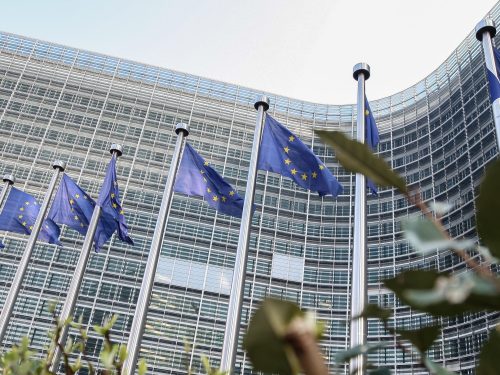
The central part of the report focuses on Europe. According to Orsini, the European dimension It remains the only entity capable of tackling the current geopolitical, technological and industrial challenges, but the Union’s current course of action is deemed insufficient.
“Europe is more necessary than ever – but it must change course and step up a gear,” stresses the president, whose remarks refer to the continent’s loss of competitiveness, the decline of its manufacturing sector and the strategic dependencies that are becoming entrenched. Orsini highlights the figure of 250,000 jobs lost in European manufacturing, which has risen to one million when related industries are taken into account, and explains how, over the last twenty-five years, the EU’s share of global GDP has fallen by around seven percentage points.
At the heart of the argument lies the relations with China, “today’s only true industrial superpower”, and the need to prevent the continent’s gradual deindustrialisation. Hence the proposal to take action along three areas of focus: a genuine single energy market, a single market for capital and savings, and the use of a common European debt to finance strategic investments.
Energy and industrial costs: a priority for businesses and growth
Energy This is one of the report’s most striking points. It is an issue that recurs both in the European debate and in the proposals for Italy. “For businesses, energy prices have now become a genuine existential threat,” states Orsini, who believes that the country cannot continue to bear energy costs that are higher than those of its European competitors. The president believes it is necessary to to step up the development of renewables, to unblock stalled authorisations, strengthen the networks and restore the energy issue to a strategic national agenda.
A heartfelt and incisive speech in which there is also room for the the issue of nuclear power, regarded as a necessary means of ensuring energy independence and security.
“To keep claiming that nuclear power is pointless because it takes 10–15 years to bring it online is false. Every year, every month that is lost is a waste.”.
Alongside renewables, the role of gas and infrastructure as essential elements of the transition.
SMEs, innovation and artificial intelligence: the drivers of growth
The country’s growth also depends on an industrial policy geared towards growth in the size of businesses.
“The country grows when small businesses become medium-sized and medium-sized businesses become large.”.
The call is for support for investment, incentives for mergers and acquisitions, and the need to strengthen existing mechanisms.
However, a significant part of the report is also devoted to innovation and artificial intelligence, which are regarded as key drivers of future competitiveness.
“AI is not a technology that we can simply buy and integrate into our systems; it is an ecosystem that we need to build.”.
Orsini’s proposal is to wider adoption of digital technologies across production chains, greater integration of software and cloud technology into incentive schemes, and significant investment in training. Not only for workers, but also for young people.
“We need an Artificial Intelligence training programme to be introduced in upper secondary school, for all young people.”.
Simplifications and reforms: from the ZES to the revision of Law 231
Another section deals with the regulatory and administrative framework. The simplification is cited as a necessary condition for attracting investment and sustaining competitiveness. The example given is that of the Single SEZ, which, according to Orsini, has demonstrated the effectiveness of streamlined procedures and fixed deadlines.
But the legislation on the administrative liability of companies is also coming under scrutiny.
“After a year and a half, that reform is no longer just necessary – it is absolutely urgent. Let’s do it now.”.
This refers to the revision of the Law 231, identified as one of the issues to be addressed in order to make the system more effective and less burdened by complexity and uncertainty.
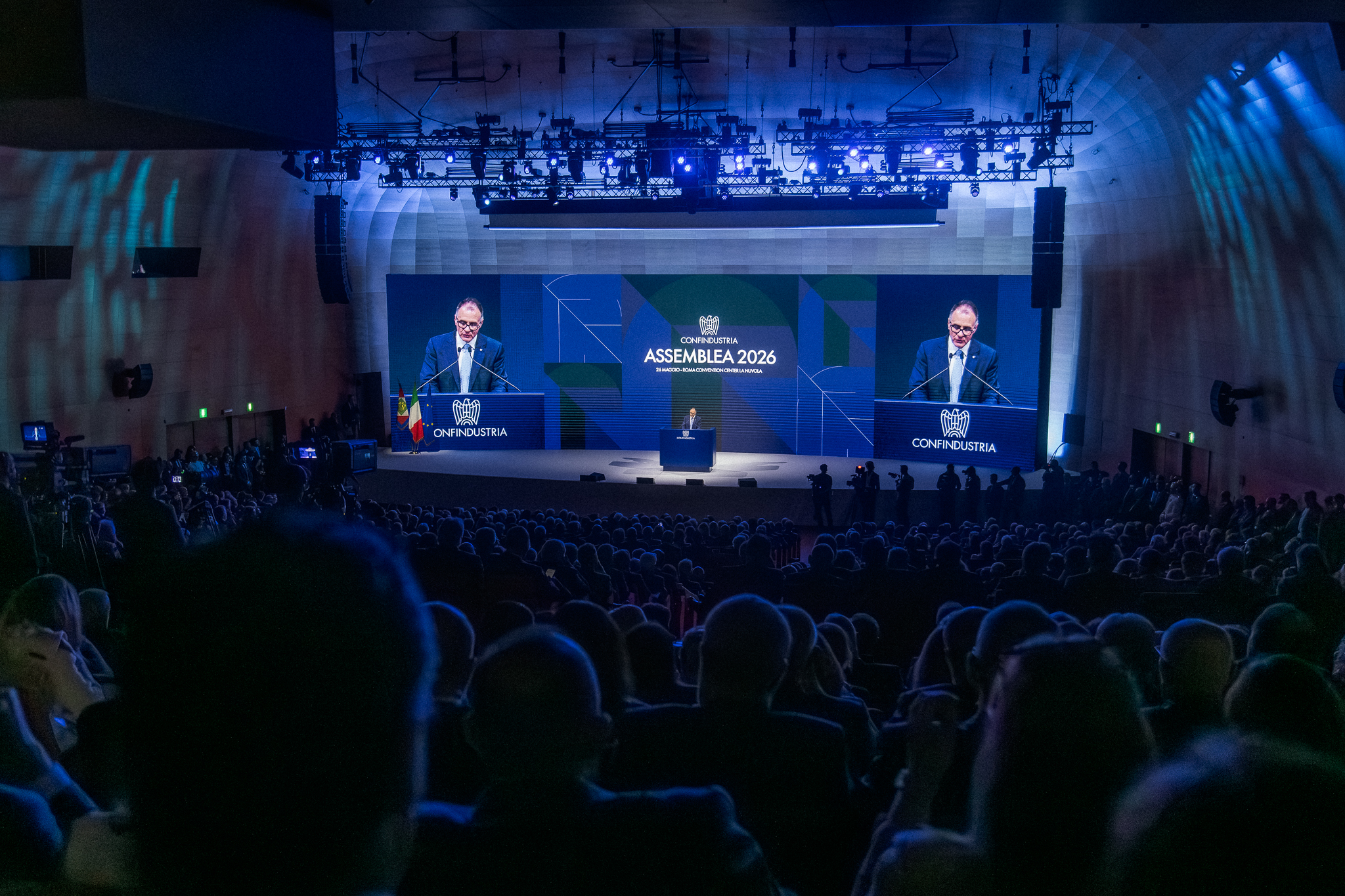
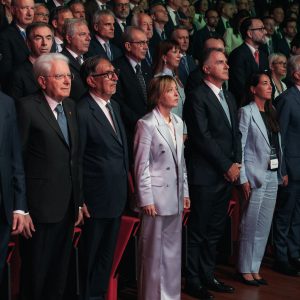
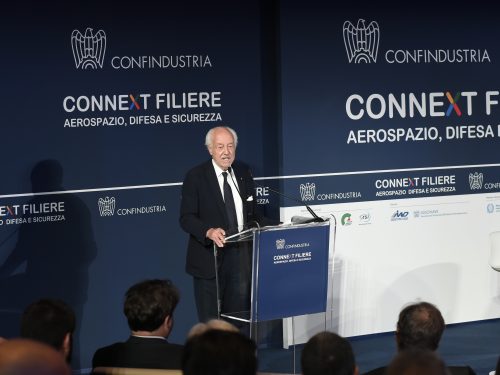
A scene from the 2026 Confindustria Assembly at the La Nuvola Convention Centre in Rome.
Alongside economic and industrial priorities, the report also highlights the approach to be taken when addressing the country’s strategic choices. For Orsini, the responsibility The issue referred to throughout this speech must not become a source of constant conflict, particularly when the matters at stake affect growth, employment and the prospects of the younger generations.
“Italian citizens understand difficult decisions when they are taken with clarity and a shared sense of responsibility. What they do not understand – and do not deserve – is to see every necessary decision turned into an electoral battleground.”.
Employment, wages and the Housing Plan: the crux of attractiveness
Towards the end of the report, the focus shifts to on employment, on wages and on the factors that make a country attractive. Orsini highlights the dialogue that has been initiated with the trade unions and their joint efforts to combat ‘pirate’ contracts.
“This combination of a ‘good’ contract and a ‘fair’ wage can give rise to a responsibility pact aimed at putting an end to ”pirate’ contracts, which undermine workers’ incomes and rights and constitute unfair competition.”.
But it also acknowledges that the issue of pay remains open and that “low wages are driving young people away from Italy”. Hence also the reference to the Housing Plan, viewed not merely as a social measure but as a tool for economic policy and growth.
The challenge of growth in Italy: “Now is the time for courage”
The conclusion brings us back to the opening message. Responsibility as a method, courage as a choice. “Industry and work are one and the same“. The president highlights the role of Italian manufacturing, “still second in Europe and eighth in the world”, and reiterates the need to ensure that deindustrialisation is not seen as an inevitable outcome. It generates “15 per cent of GDP, at least double that when you factor in related industries” and continues to be one of the driving forces behind the country’s growth.
“We do not accept deindustrialisation as an inevitable fate,” Orsini reiterates, echoing in the final paragraph of the report the political message that runs through the entire speech: “”It is a time for courage.".
A call that is directed not merely at the manufacturing sector, but at the country as a whole.
READ THE CHAIRMAN’S REPORT TO THE 2026 GENERAL MEETING