News
Share on
The prolongation of the conflict in the Middle East can jeopardise the growth of the Italian economy. This is what emerges from the Forecast Report - Spring 2026 by Centro Studi Confindustria, according to cui in the most adverse scenario GDP in 2026 could shrink to -0.7%, This compares with a growth forecast of 0.5% in the baseline scenario.
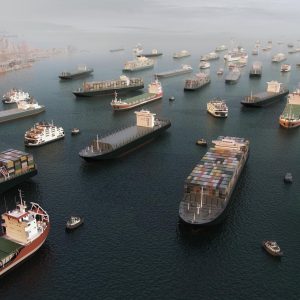
The war in Iran, which involves Israel and several Gulf countries and has led to the blockade of the Strait of Hormuz, a crucial hub for global energy supplies, with immediate effects on prices and international trade.
Confindustria's position: immediate measures are needed
In this scenario, Confindustria stresses the need for a timely and coordinated response at national and European level. In fact, the duration of the conflict represents the decisive variable for economic developments in the coming months and requires the activation of concrete measures to support businesses and households. In particular, according to Viale dell'Astronomia, it is a priority to contain the effects of the energy shock, safeguard the competitiveness of the production system, and strengthen investments.
Macroeconomic scenario: weak growth amid energy shocks and global tensions
In the light of these critical issues, the global macroeconomic picture is moving in a highly volatile context, already marked by trade tensions between the major economies and now further aggravated by the effects of the conflict in the Middle East, which are being transmitted to the economy mainly through the energy channel. Tensions over supply and supply routes are in fact affecting prices and expectations, with direct effects on inflation, financial conditions and growth.
In this context, the Centro Studi Confindustria simulations indicate very significant price increases. Oil could rise to 90% and gas by 50%, fuelling new inflationary pressures and a consequent tightening of financial conditions.
Suffering the consequences of this picture is world trade, which slows down significantly, and among the areas most exposed to the negative effects of the global scenario is the Eurozone.
Italy: fragile growth and alternative downward scenarios
As for Italy, the basic scenario remains positive but extremely delicate. Projected growth for 2026 is 0.5%, but is significantly affected by developments in the international context.
The Centro Studi's simulations clearly highlight the risks in the event of a prolonged conflict with an impact on GDP that could become much more significant. In an intermediate scenario, the Italian economy would enter into stagnation in 2026, while in the most adverse scenario, GDP could shrink by up to -0.7%, with a significant worsening compared to the baseline forecasts and a significant impact on consumption, investments and exports.
This vulnerability reflects the Italian economy's high exposure to energy and trade shocks.
Defence and industry: investment and productivity as growth multiplier
Among the possible growth-enhancing factors, the Report identifies defence spending as a possible lever for industrial development. The projected increase from 1.5% to 3.5% of GDP over the next decade can generate significant positive effects on the economy if directed towards investment and domestic production.
When these conditions materialise, the impact on GDP can be as high as +3.0% cumulatively. In contrast, a scenario with increased reliance on imports would drastically reduce the benefits, limiting them to about +0.9%.
The Strengthening the defence and aerospace supply chain is therefore a strategic lever not only for safety, but also for the innovation and productivity of the industrial system.
Exports and China: up to 16 billion at risk and new global competition
In the section dedicated to the analysis of international trade, the CSC highlights how we have entered a phase of redefinition, marked by the confrontation between the US and China and the introduction of new tariff barriers.
In 2025, Italian exports to the United States reached EUR 70 billion (+7.2%), but excluding pharmaceuticals and special orders, a contraction of 5.7% was recorded, a sign of the difficulties emerging in several manufacturing sectors.
According to estimates by Centro Studi Confindustria, assuming the current tariff structure is confirmed, the losses for Italian exports could exceed EUR 16 billion in the medium term.
In parallel, Italian imports from China exceed EUR 60 billion in 2025 (+16.4% over 2024). China is increasingly specialising in medium-high-tech sectors, whose share of Chinese exports to the rest of the world has risen from 28% to 42% in the past five years.
In this scenario, there is however a positive element concerning Italian companies showing significant adaptability. Every year, in fact, about 8% of the products change their destination market and 9% their origin market, at a higher rate than German companies.
La trade diversification thus confirms itself as a key element in strengthening the resilience of the production system.
Young people and work: less employment and more talent drain
Among the most relevant structural criticalities highlighted by the Report is the progressive downsizing of the youth component and their difficulty in entering the labour market.
La share of young people between 15 and 34 years of age decreased from 25% in 2005 to 20.6% in 2025 and is set to decrease further to 18.6% in 2070. A dynamic that equates to more than 3 million fewer young people.
A worrying picture that also highlights a paradox: in a country with fewer young people, employment levels remain among the lowest in Europe. In the 15-24 age group, only 19.7% work, compared to over 50% in Germany.
Added to this is the flight of human capital. Between 2019 and 2023, approximately 190,000 young people left Italy, about half of whom are university graduates. An issue that also directly concerns the policies adopted so far, which, as Viale dell'Astronomia points out, have mainly focused on hiring incentives, with little effect on the structural causes of low youth employability, such as the mismatch between skills and labour demand.
Political stability and credit: up to 4.6 billion in benefits for companies
Alongside the risk factors, However, the Report also highlights some resilient elements, including the positive effects of political stability in recent years.
The fall in interest rates on bank loans generated an estimated benefit of around EUR 4.6 billion per annum for businesses in 2025, which could rise to EUR 13.8 billion when fully implemented.
According to estimates by the Study Centre, political stability may have contributed between 0.5 and 1.4 billion annually to the reduction in the cost of credit, strengthening the financial conditions of the production system.
In conclusion, the Centro Studi Confindustria Report highlights a framework characterised by high international uncertainty and downside risks for growth. In this context, the performance of the Italian economy in the coming years will be conditioned by the evolution of the geopolitical scenario and the dynamics of global trade, but also by the capacity of the production system to sustain investments and productivity.
DOWNLOAD FORECAST REPORT - SPRING 2026