News
Share on
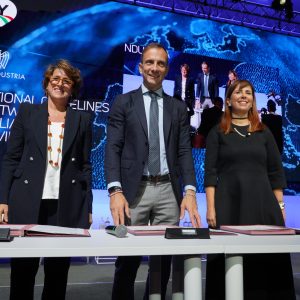
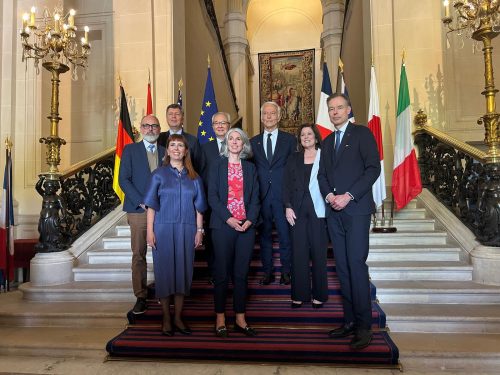
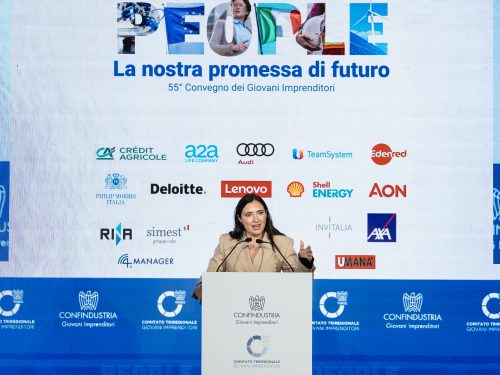
“The international order that has so far governed economic relations has not disappeared, but has become invisible. Two conflicts of increasing intensity are fuelling severe risks for the global economy, and one of them could drive several G7 countries into recession by the end of the year.” With these words Barbara Cimmino, Vice President for Export and Investment Attraction of Confindustria, spoke at the Conference on International Trade and Supply Chain Security, organised by the MEDEF a Paris within the framework of the French G7 Presidency. The meeting brought together representatives of leading business organisations from advanced countries to discuss the challenges of global trade and economic security, ahead of the B7 Final Summit scheduled for June.
Global trade: the impact of regulatory fragmentation on SMEs
In the panel devoted to the future of international trade, the vice-president of Confindustria highlighted how the increasing regulatory fragmentation and the adoption of uncoordinated economic security measures are having an increasingly heavy impact on companies, not only Italian but from all countries of the G7. A fragmentation that, Cimmino stressed, “hits SMEs the hardest, which suffer from energy price spikes, rising transport costs and increased market volatility”. “The implications are clear: without coordination, closures and loss of industrial capacity increase. The economic depression is likely to be broader and deeper”.
The three risks pointed out by Confindustria
In his speech, Cimmino recalled three risk factors weighing on the competitiveness of the international industrial system todayuncertainty, tariffs that should not exist in the G7 and divergent regulations between G7 countries“. According to Confindustria, regulatory and trade misalignment between allied economies risks weakening global value chains precisely at a time of strong geopolitical tensions and technological change.
Supply chains, strategic technologies and G7 units
“If we believe - as I believe - that companies have the ability to see solutions where we see obstacles, then our responsibility is to live up to their commitment by making our recommendations more effective,” added Cimmino, who pointed out some strategic priorities for the G7strengthen unity among partner countries, consolidate value chains for critical goods and extend industrial cooperation to clean technologies, digital and strategic sectors. “We must strive to save what is left of the multilateral trade order, before it shifts completely into other hands. Only then can our companies - especially SMEs - continue to compete, innovate and create wealth.”.
The weight of Italian exports in global value chains
“Italy,' Cimmino concluded, 'is one of the most integrated countries in global value chains: it exports about 9,000 categories of goods in 232 markets, and in 2025 exports reached EUR 643 billion, equivalent to about one third of GDP”. A strongly internationalised industrial structure that, the vice-president of Confindustria reiterated, “relies heavily on shared rules, regulatory stability and predictability”.