News
Share on
Strengthening the emergency response capacity, spreading the culture of prevention and supporting business continuity. This is the objective of the new Memorandum of Understanding signed between Confindustria and the Civil Protection Department.
An agreement that renews and structures a decade-long collaboration that has become a benchmark in the relationship between the production system and emergency management.
An agreement consolidating a ten-year strategic partnership
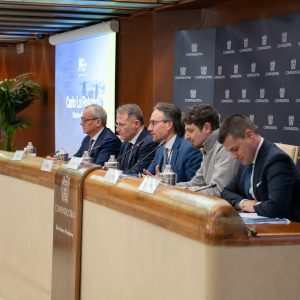
The Protocol, signed by Fausto Bianchi, President of Small Industry Confindustria, and by Fabio Ciciliano, Head of the Civil Protection Department, It formalises a public-private partnership that over the years has demonstrated a high operational capacity, both in emergency phases and in preventive preparedness.
The signing comes ten years after the start of a joint journey that began in 2016, on the occasion of the Central Italy Earthquake, and developed within of the Emergency Management Programme (EMP) of Confindustria, coordinated by Piccola Industria. An experience also recognised internationally as good practice.
From crisis management to a culture of prevention
The national context, marked by an increasing frequency of extreme events and complex crises, now makes a structured approach to prevention and preparedness indispensable. With this in mind, in a country characterised by widespread territorial fragility, collaboration between institutions and the production system therefore assumes strategic value not only for the immediate response but also for the ability to reduce the economic and social impacts of emergencies.
Within this framework, the new Protocol broadens and strengthens the scope of joint activities, going beyond crisis management and focusing on the dissemination of expertise and operational tools.
The areas of intervention of the new Protocol
The agreement provides for the development of joint initiatives on several fronts, including:
- operational tools to support business continuity;
- training courses on risks, safety, preparedness and emergencies;
- studies and analyses on the responsiveness of enterprises;
- definition of policies, instruments and proposals - including of a regulatory nature - to facilitate the securing of production activities and economic continuity.
Particular attention is then paid to strengthening the coordination at territorial level, also through the promotion of similar agreements on a regional scale, with the direct involvement of the SME.
The contribution of the Confindustria system in emergencies
Over the years, the Emergency Management Programme provided concrete support in several crisis situations.
During the earthquake in Central Italy more than 250 companies and associations involved, with the mobilisation of goods and services to an estimated value of approximately EUR 3 million. In response to the Ukrainian emergency, the system collaborated with the European Civil Protection Mechanism for the collection of goods for the reception of refugees in Poland, with an estimated value of approx. 400,000 euro.
After the flood that hit Romagna in May 2023, the PGE was active from the earliest stages, coordinating a nationwide search for vehicles and equipment to restore production activities. During the Covid-19 pandemic, Finally, it contributed to the dissemination of operational information, the definition of uniform procedures and support for the procurement of protective equipment.
Fausto Bianchi: «Prevention and concrete tools to help SMEs in emergencies»
“With the renewal of the Protocol with the National Civil Protection Department, we intend to continue and further strengthen a public-private collaboration that over the years has proven its worth in promoting the culture of prevention and providing concrete tools for the effective management of emergencies, such as Confindustria's Emergency Management Programme,” said Fausto Bianchi, President of Piccola Industria Confindustria.
“In the coming months, we will work even harder to consolidate the knowledge and collaboration between our two systems, focusing on training, operational tools to support business continuity, and shared initiatives,” added President Bianchi, emphasising “the goal of enabling SMEs to minimise damage and continue to operate even in critical situations.
Fabio Ciciliano: «Building resilience is a shared responsibility»
“Faced with the fragility of our territory and the climate crisis that makes increasingly frequent extreme events, the joint commitment between public and private sectors to build resilience is inescapable,” said Fabio Ciciliano, Head of the Civil Protection Department.
“Working together to disseminate the culture of prevention, promote mutual knowledge and enhance the skills of businesses in the area, from a civil protection perspective, means investing in communities that are better prepared to deal with an emergency and support the restart of the production sector in the post-emergency phase, favouring the quickest return to normal conditions in the affected territories,” Ciciliano concluded.