News
Share on
The time for caution is over.
Europe is located in front of an existential challengeWhile the United States and China protect their industries and decisively invest in new technologies, we remain prisoners of rules, constraints and ideologies that risk stifling growth and employment.
The race for subsidies and global tensions are undermining the resilience of our production system and our social model. Either we will be able to truly unite - and not only in words - competitiveness and decarbonisation, or we will see our industrial base, wages and social cohesion shrink, jeopardising the very idea of Europe.
We believe in the values of the Union, wholeheartedly. But the target to reduce emissions by 90% by 2040, under current conditions, is unrealistic. Without a common industrial strategy, the ecological transition has already turned into deindustrialisation. Europe's industrial engine is shutting down, just as the other major powers are pursuing muscular industrial and trade policies.
Numbers count: Europe accounts for 6% of global emissions but imposes a price on CO2 that is up to 4-6 times higher than in the few other areas where it is paid. Three out of every four grams of CO2 are emitted in the world without charge. We appreciated the Italian government's clarity in forcefully raising the issue of competitive energy and technological neutrality, but we are concerned by the European Commission's constant postponements anchored in visions of the past, which do not push the European Council in the right direction with the necessary speed.
Transition cannot be reduced to a zealous donkey battlewhere you don't even notice that the windmills have blades made in China. First we need sustainable economic, industrial and infrastructural conditions, then gradual and verifiable environmental goals.
We pay up to twice as much for energy as our international competitors. Without a plan to reduce costs and ensure clean energy suitable for our businesses, we risk driving away investments and companies, leaving only bills and good intentions.
Common rules, fairer taxation and true technology neutrality are needed. If we really want to compete, we must be able to use all the cards on the table: nuclear, biofuels, hydrogen, hybrid. The ETS has been mismanaged and from a potential pioneering solution, it has turned into a mere tax - yet another - on labour, business and energy. A tax that, paradoxically, is reinforced in the absence of mature, ready-to-use technologies.
With ETS1 still on fire, Brussels is already sharpening ETS2, with additional burdens amounting to billions of euros on households and small businesses: waving the spectre of a CO2 charge for every hour of heating turned on, for every kilometre driven by car.
These new instruments must be tested before they come into force, as we do in factories with machinery. There is no margin for error or posthumous apology: we cannot remove free allowances from the ETS without knowing whether the result will be de-industrialisation; we cannot introduce the CBAM - the border carbon adjustment instrument - half built, risking to lock our economies inside a wall, which will block growth, exports and favour relocations.
Defending industry means defending work, innovation, skills: in a word, the democratic and social model in which we have grown up and in which we want to continue to live by improving it.
The automotive sector is the first test of European credibilityWe will not stand idly by while one of our main industries is sacrificed on the altar of the most short-sighted conformist bureaucracy. The rules for cars and vans must be revised, and those for heavy goods vehicles must also be rewritten.
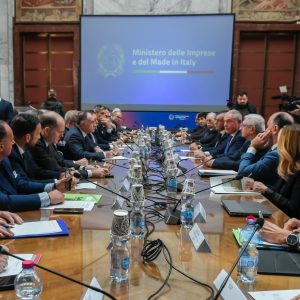
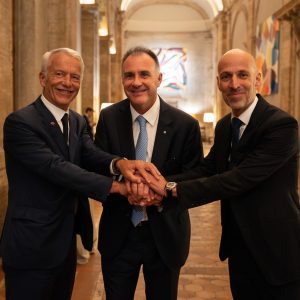
In the upcoming trilateral between Confindustria, Medef and BDI, the three main European industrial associations, they will bring forward a common vision of competitiveness and growth, to restore Europe's ability to produce value, innovation and quality employment.
We must have the courage to review bad choices in order to build a more balanced economic, environmental and social future.
The Industriali Italiani, strongly and with one voice join those who call on the Commission and national governments, starting with the Italian one, of acting together boldly and swiftly. Without a common industrial - and therefore social - policy and a cohesive long-term vision, there will be no transition that holds, no future that can be truly European.