News
Share on
While at Alden Biesen the informal retreat of the EU Heads of State and Government devoted to competitiveness opens, Confindustria intervenes in the debate by raising the issue of the cost of energy and the impact of climate policies on manufacturing. Astronomy Avenue calls for the temporary suspension of the Emissions Trading Scheme for the manufacturing sector, the stop of ETS2 before its entry into force and the suspension of the maritime ETS.
The request comes in view of the system review scheduled for the third quarter of the year, in an economic, technological and geopolitical context that - according to Confindustria - is widening the gap between regulatory obligations and actual conditions to support decarbonisation, especially in hard-to-abate sectors.
Why Confindustria calls for the suspension of the European Emissions Trading Scheme
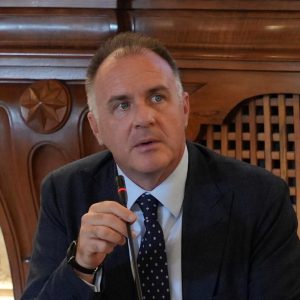
“As Europe's second largest industrial power and exporter, we ask the’European Union to temporarily suspend the Emissions Trading Scheme (ETS) for the manufacturing sector, gas-fired thermoelectric production, shipping, buildings and mobility,” said the President of Confindustria, Emanuele Orsini.
“In a deeply changed geopolitical context, the ETS, in its current configuration, has shown all its limits, turning from a decarbonisation tool into a vehicle for financial speculation. This is why, also representing Europe's second industrial and exporting nation, we call for the system to be suspended in order to be thoroughly rethought,” added the Confindustria number one.
ETS, global emissions and the competitive gap
According to Orsini, “the objectivity of the facts is there for all to see. The ETS is an unbalanced system which in fact burdens the competitive capacity of European industry. Since 1990, global emissions have increased by 70%, driven mainly by China, whose cumulative emissions now exceed those of the entire European Union”.
Currently, only about 25% of global emissions are covered by ETS, while the European ETS remains the most expensive. Strategic sectors - such as steel, chemicals and ceramics, which are already among the most decarbonised globally - risk, according to Confindustria, being squeezed out of international markets without rapid EU intervention.
Energy, prices and European industrial policy
“And that's not enough, going forward it will be worse. The demand for energy is set to grow at a fast pace in the coming years and this will lead to a stress on supplies and an increase in prices,” Orsini further explains.
“Therefore, there is an urgent need to stop the ETS to avoid increasing the burden of energy costs on businesses and households even more. And this is also the responsibility of a distorting price formation mechanism, which, to put it simply, charges so much not only for gas energy but also (and this is deadly) for renewable and hydroelectric sources. Practically anyone who consumes good or bad energy pays for it in the same way, not incentivising virtuous behaviour. The sum of all these costs is bringing industry and our security, not only economic, to its knees”.
“A credible and comprehensive industrial strategy is needed. The reduction of CO2 emissions must go hand in hand with the conditions necessary to compete globally - especially access to affordable and fully decarbonised energy. For this there is a need to suspend the ETS and rethink energy and decarbonisation policy within a holistic framework to defend and promote European industry“concluded the President.
Confindustria is thus bringing the issue of the balance between climate transition and industrial competitiveness to the centre of the European debate, with a view to the review of the system planned in the coming months.